

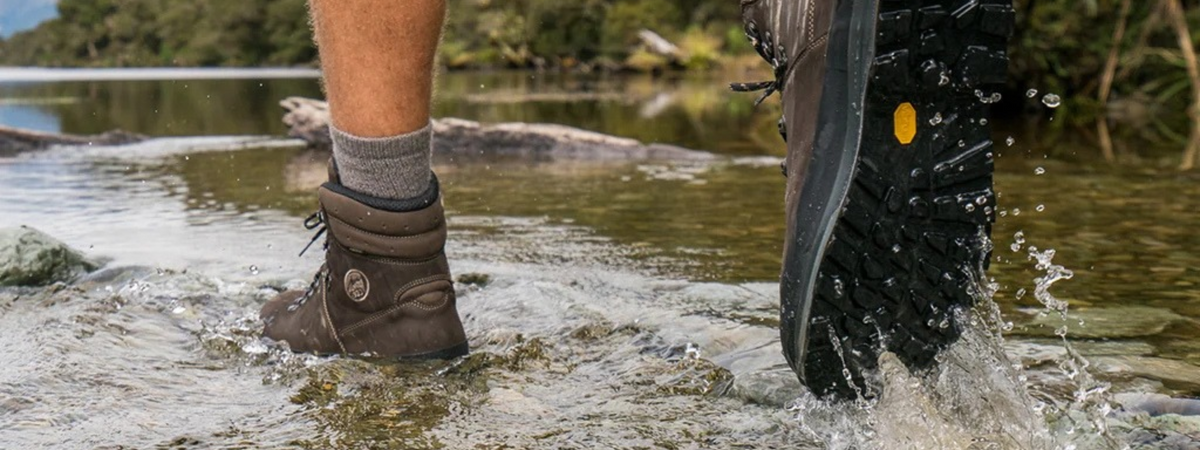
How to Fit Hiking Boots (from a Boot Fitter)
Knowing how to fit hiking boots is the difference between a great trip and a week of blisters. The best boot on the shelf is the wrong boot if it doesn't fit your foot, and a good fit can make a mid-priced boot feel better than a premium one that's wrong for you. In this guide, our CEO Dave walks you through how we fit hiking boots in our Helensburgh store: sizing, width, lacing, heel lock lacing and breaking in.
Prefer to see it? Watch Dave's fitting video below, then use the step-by-step guide to check your own boots. When you're ready, you can book a fitting with our team.
Book a fittingShop hiking boots
Watch: Daves LOWA Comparison Guide
The short answer: how hiking boots should fit
A well-fitted hiking boot should feel snug but never tight. These are the checks we make with every customer:
- Heel: stays put when you walk, with no noticeable lifting
- Toes: have room to move, and don't touch the front of the boot on a downhill
- Width: comfortable across the ball of your foot, with no pinching or numbness
- Instep and ankle: no sharp pressure points when laced
- Both feet: checked on both feet, because most people have one that's a little bigger
If any of those fail, the boot isn't right yet, or the lacing needs adjusting. Read on to see how to fix each one.
Before you try on hiking boots
- Measure your feet. Use a printable size chart such as the LOWA size chart to get a starting size. Treat it as a starting point, not the final answer.
- Try boots on in the afternoon. Feet swell through the day, and they swell more on a long hike, so a morning fit can be too snug later.
- Wear your hiking socks. Bring the hiking socks you'll actually walk in. Thin cotton socks will give you a false fit.
- Bring your orthotics or insoles if you use them, and test the boot with them in.
- Think about your trip. A day hike, a multi-day trek with a heavy pack and an alpine climb each need a different boot, and a different fit.

Download the LOWA size chartShop hiking socks
How to fit hiking boots: a step-by-step test
Here's the process we follow in store. You can do most of it at home with a new pair, as long as you don't wear them outside.
- Start with loose laces. Loosen the laces fully and open the tongue so your foot slides in easily.
- Check the toe room. Stand up, push your foot forward until your toes touch the front, then slide a finger down the back of your heel. Done right, you can slide a finger down behind your heel. Another check: with your heel pressed back, you should have roughly a thumb's width of space in front of your longest toe.
- Lock your heel in. Push your heel into the back of the boot, then lace up from the toes to the top, snug but not crushing.
- Check the width. Wiggle your toes. The ball of your foot should feel held, not squeezed, and your toes should be able to spread.
- Check the instep and ankle. Look for pressure on the top of your foot or around your ankle. Pressure points that bother you now will be worse after hours of walking.
- Walk around. Walk for at least 10 minutes. Use a ramp or stairs if you can. On an incline your heel should stay down, and on a decline your toes shouldn't hit the front.
- Repeat on the other foot. Fit the boot to your larger foot.
Not sure what you're feeling? That's what a fitting is for. Our team can check all of this with you, and can book you in for a fitting.
Should hiking boots be bigger or smaller?
Hiking boots should fit a little roomier than your everyday shoes, but they should not be loose. There's no single rule like "go up a full size", because sizing varies between brands and between models. What matters is the result:
- Too small and your toes hit the front on downhills, which bruises toenails and hurts
- Too big and your heel slides, which causes blisters, and your foot moves around inside the boot
- Just right is a locked heel, a roomy toe box and a snug but comfortable hold across the middle
Why room for the toes? Because your foot lengthens and swells as you walk, and downhill walking pushes your foot forward. Why a locked heel? Because that's what stops the friction that causes blisters. If you have to choose between slightly too much room and slightly too little, a good lacing job can fix a little extra space. Nothing fixes a boot that's too short.
Width and volume: do you need a wide fit?
If boots feel tight across the ball of your foot no matter how you lace, or your toes go numb, the boot may be too narrow for you. Many brands offer wide fits, and it's worth trying one.
LOWA builds wide-fit versions of several boots on its wide last, including the Ranger Evo GTX Wide, the Tibet Evo GTX Wide and the Renegade GTX Mid Wide. The Renegade GTX Mid Women's is built on a women's-specific last. Not sure whether you need wide? Use the size chart, then come in and try a pair on.

Heel lock lacing: how to stop heel slip
Heel lock lacing (also called a surgeon's knot lock or runner's loop) is the quickest fix for heel slip. It uses the top eyelets to pull your heel back into the cup of the boot. Here's how:
- Lace your boots normally up to the second-last eyelet (or hook).
- Take each lace and thread it up through the top eyelet on the same side, without crossing it over. This makes a small loop on each side.
- Cross the laces and thread each end through the loop on the opposite side.
- Pull both laces tight and down, which draws your heel back into the boot.
- Tie your usual knot at the top.
Other lacing adjustments that help:
- Toes hitting the front on downhills: lace snugly through the instep and use heel lock lacing so your foot can't slide forward
- Pressure on the top of your foot: loosen the laces over the sore spot, or skip a cross-over (window lacing) at that point
- Tight forefoot, snug heel: lace the lower part of the boot a little looser and the upper part a little firmer
Some boots build this in. The LOWA Tibet Evo GTX has an I-Lock System, a clamp hook that lets you lock the lower lacing zone and set the upper zone separately. It also has roller eyelets and an X-lacing stud.
Hiking boots you don't have to break in
Everyone wants to know about hiking boots you don't have to break in. Some boots are softer and more flexible from the start. Our product page for the LOWA Renegade GTX Mid Wide says it needs no break-in period, so it's comfortable straight out of the box, and the women's Renegade says the same. It's a good first hiking boot for beginner to intermediate hikers on weekend walks with a 5 to 10 kg pack.
Two things to keep in mind. "No break-in" still doesn't mean "no fit check", because a boot that doesn't fit your foot will cause problems however soft it is. And stiffer, heavier-duty boots, like the Ranger Evo and Tibet Evo, are best worn in before a big trip.
How to break in hiking boots
- Wear them around the house for a few evenings, with your hiking socks.
- Take them on short walks, then longer ones, building up gradually.
- Add some pack weight once they feel comfortable.
- Stop and adjust the lacing at the first sign of a hot spot, before it becomes a blister.
- Don't save the first wear for the first day of a trip.
Common hiking boot fit problems and how to fix them
- Heel slip or blisters at the back: try heel lock lacing, a snugger heel fit or a different sock. If the heel still lifts a lot, the boot is the wrong shape for your foot.
- Toes hit the front on downhills: lace more tightly over the instep. If your toes still touch, the boot is likely too short.
- Numb toes or pressure across the ball of the foot: the boot may be too narrow. Try a wide fit.
- Sore spot on the top of the foot: loosen or re-lace that area, and check the tongue sits flat.
- Blisters on the sides of your feet: usually a width problem. Try a different width or last.
Look after your fit
A boot that fits well on day one will change over time. Check your soles and laces before every trip, and see our guide to caring for your LOWA hiking boots to keep them performing. When your boots start to wear out, or your feet change, our guide to the 5 signs it's time to replace your hiking boots explains what to look for. Our footwear care range has cleaners and waterproofing products.
Ready to choose your boots?
Once you know how a boot should fit, the next step is choosing the right one for your trip. See Dave's picks for the best hiking boots in Australia or read our hiking boots comparison guide for a side-by-side look at the range.

Book a hiking boot fitting
The easiest way to get the fit right is to let someone check it with you. Come in to our Helensburgh store and our team will go through sizing and width, help you try on different boots and show you how to lace them for your feet. We're at 10/177 Princes Highway, Helensburgh NSW 2508, open Monday to Friday 10am to 5pm and Saturday 9am to 1pm.
Book a fittingCall (02) 4294 2810

Why shop with us at PAST Outdoors
We're a family-owned and operated Australian outdoor retailer based in Helensburgh, NSW, with a carefully curated range of hiking and camping gear. We only stock gear we trust, and we're trusted suppliers for emergency services, government, military and outdoor education groups.
Boots are a personal fit, so there's no substitute for trying a pair on. Come in and see us, and our team will take you through sizing, talk through where you're headed and how much you'll be carrying, and help you find the right boot for your next trip. You can also shop online at pastoutdoors.com, and our team is always happy to give expert advice on the rest of your kit.
Frequently asked questions
How should hiking boots fit?
Snug but not tight. Your heel should stay put, your toes should have room to move without touching the front on downhills, and the ball of your foot should feel held rather than squeezed. Check both feet, wearing the socks you'll hike in.
Should hiking boots be bigger or smaller than normal shoes?
A little roomier than everyday shoes, but not loose. Sizes vary between brands, so there's no single rule. Use the LOWA size chart as a starting point and try boots on in the afternoon, wearing your hiking socks.
How much room should I have at the toe?
About a thumb's width in front of your longest toe when your heel is pressed back, so your toes don't hit the front on downhills. If they do, the boot is likely too short.
Should hiking boots be tight or loose?
Neither. Hold your heel firmly, give your toes room and make the middle of the boot snug but comfortable. Lacing can fine-tune the fit, but it can't fix a boot that's the wrong size or shape.
How do I stop my heel slipping in hiking boots?
Use heel lock lacing: lace up to the second-last eyelet, thread each lace up through the top eyelet on the same side to make a loop, cross the laces through the opposite loops, pull tight and tie. If your heel still lifts a lot, the boot probably doesn't suit the shape of your foot.
What is heel lock lacing?
Heel lock lacing, also called a surgeon's knot lock or runner's loop, uses the top eyelets to pull your heel back into the boot. It's the quickest way to reduce heel slip and downhill toe bang.
Are there hiking boots you don't have to break in?
Some are comfortable straight away. Our product pages say the LOWA Renegade GTX Mid Wide and the women's Renegade need no break-in period. Heavier boots built for big packs, like the Ranger Evo and Tibet Evo, are best worn in before a big trip.
How long does it take to break in hiking boots?
It varies with the boot, so we don't give a set number. Wear them around the house, then on short walks, then longer ones with a pack, and fix any hot spots as soon as they appear. Don't leave the first wear until your trip.
What socks should I wear when fitting hiking boots?
The socks you'll actually hike in. Thin everyday socks will give a false fit. Browse our hiking socks.
How do I know if my hiking boots are too small?
Your toes hit the front on downhills, you get bruised or painful toenails, or you feel pressure across the toes even with loose laces. Try a longer size, or a wide fit if the problem is width.
Can I get my hiking boots fitted at PAST Outdoors?
Yes. Our team can go through sizing and width and show you how to lace for your feet at our Helensburgh store. Contact us to book a fitting, or call (02) 4294 2810.
Get your hiking boots fitted
The right fit makes every kilometre easier. Come in and see our team at Helensburgh, or shop online.
Book a fitting Shop hiking boots

Leave a comment
This site is protected by hCaptcha and the hCaptcha Privacy Policy and Terms of Service apply.