
The complete guide to hiking poles (2026)
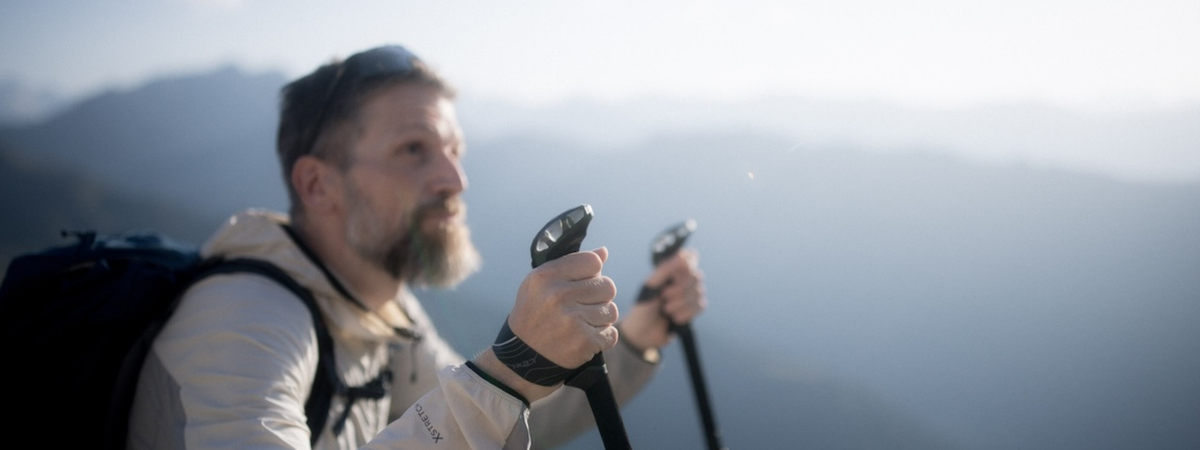
Ask any experienced hiker what single piece of gear changed their trips the most, and there's a good chance poles will come up. Good hiking poles take pressure off your knees and ankles, especially on long descents, improve your balance on loose scree, river crossings and muddy tracks, and let you engage your arms and shoulders to share the workload usually carried entirely by your legs.

Why we think every hiker needs a good set of hiking poles
We've written more on this in our piece on why walking poles for hiking matter more than you think, but the short version is this: poles aren't just for older hikers or steep alpine routes. They're for anyone who wants to hike further, more comfortably, and with less risk of a rolled ankle.
In this guide, we're rounding up the best hiking poles available in our trekking poles & crampons collection, explaining the differences between fixed, folding and collapsible designs, and helping you work out which pair (or which combination of poles and crampons) suits your next adventure.

Trekking poles vs hiking poles vs walking poles: what's the difference?
We get asked this a lot, so let's clear it up. In practice, the terms are used fairly interchangeably across the industry, but there are some general distinctions worth knowing:
- Trekking poles tend to be sturdier, often with adjustable-length shafts, and are built for multi-day hikes, steep terrain and heavier packs.
- Hiking poles is the broader, catch-all term covering everything from ultralight day-hiking sticks to full mountaineering poles.
- Walking poles usually refers to lighter designs meant for day walks, fitness walking or gentler trails, like our Helinox Passport range.
If you want a deeper breakdown, our guide on choosing the best hiking poles covers grip materials, shaft construction and locking mechanisms in more detail.

Best folding hiking poles for lightweight trips
If pack weight and space are a priority, hiking poles folding down into a compact bundle are hard to beat. Rather than telescoping in and out like traditional poles, folding designs collapse into short sections connected by an internal cord, so they pack down to roughly the length of a water bottle.
Helinox Passport FL120 Walking Poles are a great example — genuinely collapsible walking poles for hiking that strap easily to the outside of a daypack or slide into a side pocket without adding bulk. They're built on DAC aluminium shafts, so despite folding down small, they still hold up on uneven, rocky trails.
Black Diamond Distance Carbon FLZ Trekking Poles take the same folding concept and pair it with carbon fibre shafts, shaving off weight without sacrificing strength. These are a favourite with trail runners and ultralight hikers who want poles they'll barely notice are in the pack until they need them.
Shop all Trekking poles

Best adjustable and twist-lock hiking poles
Not every hiker wants a folding pole — sometimes a reliable, fully adjustable design is the safer bet, particularly for longer treks where you might want to change the pole length throughout the day (shorter for climbs, longer for descents).
Helinox Passport TL120 and TL130 Walking Poles use a tension lock (TL) twist mechanism at the grip, giving you quick, tool-free length adjustment and long-wearing tungsten-carbide tips for reliable grip on rock and hard-packed trail. They're supplied with rubber tip covers, so they're just as happy on a paved path as they are on the trail.

Black Diamond Alpine Carbon Cork Trekking Poles and the Black Diamond Pursuit Carbon FLZ Trekking Poles are built for hikers who want a genuine all-rounder — durable enough for multi-day treks, light enough not to weigh you down, and finished with cork grips that mould to your hand over time and stay comfortable even when your hands are sweaty.
For hikers after a simple, budget-friendly entry point, the Black Diamond Explorer 3 Trekking Poles offer solid aluminium construction and dependable locking without the higher price tag of the carbon models.
When you need crampons and whippets, not just poles
Poles are brilliant for balance and support, but once you're on snow, ice or a steep alpine slope, they're not enough on their own. This is where crampons and whippet attachments come in.
Black Diamond Contact Crampons are built from durable stainless steel and strap onto most hiking and mountaineering boots, giving you the traction you need on icy or hard-packed snow where a standard pole tip would simply slide. If you're heading somewhere with a mix of snow and rock, we'd always recommend packing crampons rather than hoping your boots' tread will be enough.
The Black Diamond Whippet Ski Pole and Whippet Attachment combine the support of a standard pole with a self-arrest pick at the base, so if you do lose your footing on a steep, icy slope, you've got a genuine chance of stopping a slide before it becomes serious. These are worth considering for anyone doing shoulder-season hikes, alpine crossings or ski touring where conditions can shift quickly.

If snow, ice or heavy mud are part of your usual terrain, it's also worth pairing your poles and crampons with a solid pair of gaiters — our ultimate guide to gaiters explains why they're one of the most underrated pieces of kit for keeping debris, snow and water out of your boots.
How to choose the right hiking poles for your trip
A few things we always tell customers to think through before buying:
- Terrain — smooth, well-formed trails need less from a pole than loose scree, river crossings or snow.
- Pack weight priorities — if you're chasing an ultralight setup, folding carbon poles will save you the most grams; if durability matters more than weight, aluminium is usually the safer bet.
- Trip length — day walkers can usually get away with lighter, simpler designs, while multi-day trekkers benefit from adjustable-length poles that can adapt as the terrain and pack weight change.
-
Conditions underfoot — if there's any chance of snow or ice, crampons (and possibly a whippet) deserve a place in your kit alongside your poles.

It's also worth thinking about your hiking poles as part of a broader safety kit rather than in isolation. On remote or exposed routes, we always recommend carrying a GPS or personal locator beacon alongside your poles and crampons — our guide comparing a personal locator beacon vs Garmin inReach is a good place to start if you're not sure which suits your trips, and our piece on why a navigation course is essential for every hiker is well worth a read before your next big trip.
For hikers heading out in colder months, our winter hiking accessories guide and our roundup of the best gloves for hiking, climbing and trail running both pair nicely with the pole and crampon advice above.
Why shop hiking poles at PAST Outdoors
We're a family-owned Australian hiking, camping and travel business, and we've spent years helping hikers get kitted out properly for everything from weekend day walks to serious alpine treks. We don't just stock trekking poles, folding poles and crampons — we use this gear ourselves, which is why we can tell you honestly which pole suits a technical alpine crossing and which one is better suited to an easy weekend walk.

Our Founder Dave Parker, trekking in Canterbury, New Zealand.
With over 2,200 five-star reviews from hikers across Australia and beyond, we're proud of the trust our customers place in us. We carry trusted brands like Black Diamond and Helinox because we know they hold up on Australian and New Zealand trails, and our retail store in Helensburgh, NSW means there's always a real person behind the advice — not just a product listing.
If you're planning your next hike, we'd love to help you find the right poles, crampons and safety gear for the trip ahead. Explore our full range, read our guides, and get in touch if you're not sure what's right for you — we're always happy to talk gear.

Ready to find your perfect pair of poles?
Whether you're after lightweight, collapsible walking poles for hiking day trips or a heavier-duty trekking and crampon setup for alpine conditions, we've got you covered. Browse the full range below and head out prepared for whatever the trail throws at you.
What length should my hiking poles be?
As a general rule, your elbow should sit at roughly a 90-degree angle when you're holding the pole with the tip on the ground. Most adjustable poles let you shorten them for climbs and lengthen them for descents, so you're not locked into one length for the whole hike.
Do I need crampons as well as hiking poles?
If there's any chance of snow, ice or a steep alpine slope on your route, we recommend carrying crampons alongside your poles. Poles help with balance and support, but crampons give you the underfoot traction you need in icy or snowy conditions.
What's the difference between folding and telescoping poles?
Folding (or collapsible) poles break down into short sections joined by an internal cord, so they pack down very small and are great for daypacks or travel. Telescoping poles slide in and out of themselves and often offer a wider range of length adjustment, which can suit multi-day treks with changing terrain.

Leave a comment
This site is protected by hCaptcha and the hCaptcha Privacy Policy and Terms of Service apply.