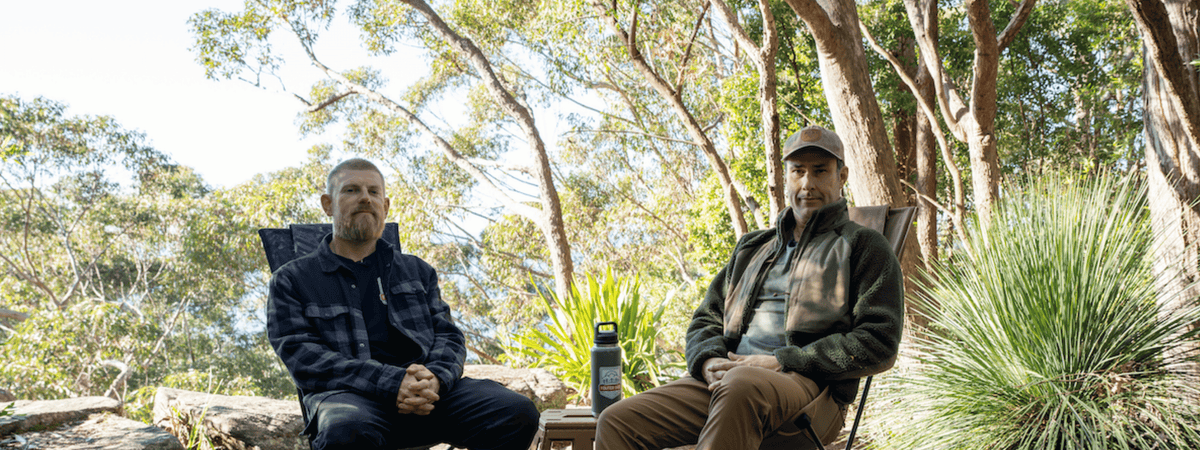
PAST Outdoors CEO Dave Parker on The Outer Side Podcast
If you've been into the store, you already know Dave doesn't do small talk about gear. He does long talk about gear. So when Tony invited him onto The Outer Side Podcast, it was definitely not going to be a ten-minute chat about tent pegs.
It wasn't. It's the full story — the country town, the Army, the sewing machine, the business, the community and the philosophy that runs through all of it that's made it such a huge success.
Dave's story: from a country town to Special Operations
Dave grew up in a small Australian country town — motorbikes, .22s, and his grandparents' property. He left school at the end of 1995 and went straight into a furniture-making apprenticeship. Hands, tools, timber, and a very early lesson in the difference between something built properly and something built to a price. (When Tony asks him what his dream job was as a kid, the answer is immediate: builder.)

He joined the Army in 1999 and stayed for 20 years, most of it in Special Operations. The formative part wasn't the operations — it was the building. Dave's unit was raised from almost nothing.
"It was literally like a start-up business. A little bit of funding, a little bit of kit. You identify the problem, how we're going to solve it, what kit we need to solve it — and we go and seek the best possible kit we could, because if the kit failed, we failed and the mission failed."
That process is still the exact process they use to decide what goes on their shelves today.
Leaving the Army and learning a new language
Three weeks out from his discharge date, after close to 20 years in Special Operations, Dave was offered a scholarship at AGSM at UNSW. He'd never done full-time uni in his life. He went with it anyway.

He's very funny about this on the show. Going from a unit where everybody was hand-picked, motivated and pointed at the same objective, to a lecture theatre full of people twenty years younger, was a genuine culture shock. He learned about different types of people and how they make decisions — and, memorably, quite a few things you simply can't say in the real world. Alli, his wife who he met just after leaving the 2nd Commando Regiment, keeps a running list.
It's a useful part of the episode, because it's the hinge point. Dave went in not knowing what he wanted to do next and came out knowing two things: he wanted to start his own business, and he'd learned how to have a proper conversation with anyone in one.
A Tipi Tent, a sewing machine and an 80sqm unit
Then COVID hit. Uni finished, the country locked down, and Dave finally had a bit of breathing space. So he sat down at a sewing machine and made his own outdoor kit — the Ultralight PAST Outdoors Tipi Tent.
He posted it on Instagram. Somebody asked if he'd make them one. He remembered the entrepreneurship lecture about faking it till you make it, built a brand and a page overnight, opened pre-orders — and got one. Then he had to actually make it.
That tipi still goes everywhere, from family camping trips to snow camping.

Then, because people kept asking what kit they needed and Dave didn't love sending them elsewhere for it, he started approaching brands. One brand became leverage for the next. And it just kept growing.
Dave started PAST Outdoors in a tiny 80 square metre unit and has moved five times since. Today the store is spread across 700+ square metres of retail, wholesale and 3PL space, with 40-70% year on year growth, that now includes the distribution of ten other e-commerce brands. If you want a sense of what that looks like in person, read why they're best camping store in Sydney and where they sit among other camping stores in Sydney.
From small business to scale-up: growing fast at PAST
One of the things Tony digs into is how many different things they actually do. There are five key revenue channels that continue to grow the business:
- E-commerce and retail — including seriously high-end brands like Outdoor Research, Fjällräven, Patagonia and Lowa, some of which they have Sydney locked down for.
As Dave puts it: "We don't stock any sh*t products. Only high quality brands that I, and others I know trust." Saying no to the wrong brands has been just as important as saying yes to the right ones.
-
Training and education — navigation courses run with ex-military instructors, women's self defence for hikers and trail runners, first aid course and cooking classes. Dave's wilderness first aid guide came straight out of these sessions.
-
Experiences — guided hikes in New Zealand, in places most visitors would never think to go, plus full logistical support including pre-positioned food and equipment. If that's on your list, read the complete guide to hiking New Zealand and how to prepare for a multi-day hike there.
-
Industry: gear for Government, Military and First Response organisations — kitted out mission-before-admin style, the same thinking behind the tactical equipment range. When Police Rescue and tactical units need something because they've been recalled, they get it now and PAST Outdoors sorts the paperwork out later.
- 3PL, distribution and Marketing Services for ten other e-commerce brands in a range of sectors.
Holding it together is Alli, Dave's wife and Director of Marketing — or, in Dave's words on the podcast, a "shit hot" marketing manager. They met at uni doing their MBA. Alli was originally trained in Anthropology, which sounds like an odd fit for outdoor retail until you hear Dave explain it: marketing is human analysis, and she is very good at understand humans, psychology and how they think. Customers walk in and can't tell us how they found us. What they may not know is that she's found them, many times over, before they've walked in that door.

The hiring philosophy comes straight from the unit, too — hire slow, fire fast, and no wasted seats. Read more about their team here.
Why an outdoor podcast is the perfect place to talk about gear
Here's the thing about a good Outdoor Podcast: there's nowhere to hide. You can't hide behind a product photo or a 30-second ad. You have to explain your reasoning out loud, and if it doesn't hold up, everyone hears it.
That matters more than ever, because Dave and Tony spend a good chunk of the episode on how hard it's become for a consumer to find an honest opinion. Half the "reviews" online are paid placements. Dave's own influencers are Special Forces guys and specialist Police units who send him blunt feedback and don't want a cent for it.
It's the same reason why we think you should be listening to the Zero Limits Podcast. Long-form audio suits the way they talk to people in store — properly, with time, and with a deep understanding of the problems that needs to be solved.

The Community is the real story
The part of the episode they're proudest of has nothing to do with products.
"Every day, someone from my old Unit will come into the store or some of the new lads going into the Army coming down to see me."
"New blokes get told by the lads at work to go down and see Dave, he'll sort you out". Over the years PAST Outdoors has grown a community of people who trust us and who genuinely feel like family.
They get a few hundred of them turning up to they're events — and they know them all by name. They come back with photos from the summit, and tell them when something goes wrong.
They're the same crowd who come to the executive retreats and leadership programs, who sit in on first aid courses, and who are booked onto they're New Zealand hikes — a trip Dave is looking forward to mostly because he gets to hang out with customers who've become mates.

Which brings us to the line that sums up the whole business:
"We're not selling people stuff. We're solving problems."
Sometimes that means sending someone out of the store without buying anything, or pointing them down the road because what they want isn't what they do. It's a hard thing to do with staff and kids to feed. It's also the only reason people come back.
Why the clock is the thing that actually matters
Ask Dave what he'd take an unlimited supply of and he doesn't hesitate: time. It comes back around later in the episode, and it's the best moment of the conversation:
"Every trip is so important. I'll never have the time back so making those memories are so important."
That's the actual reason they're fussy about kit. Not because gear is precious, but because time is. A leaking tent or a pack that doesn't fit doesn't just ruin a night — it burns a weekend you don't get back. It's why we're so particular about safety comms like PLBs and Garmin inReach, why they bang on about carrying a proper first aid kit, and why they'll happily spend twenty minutes talking about sleeping mats and R-values. Sleep is a weapon, as they used to say.

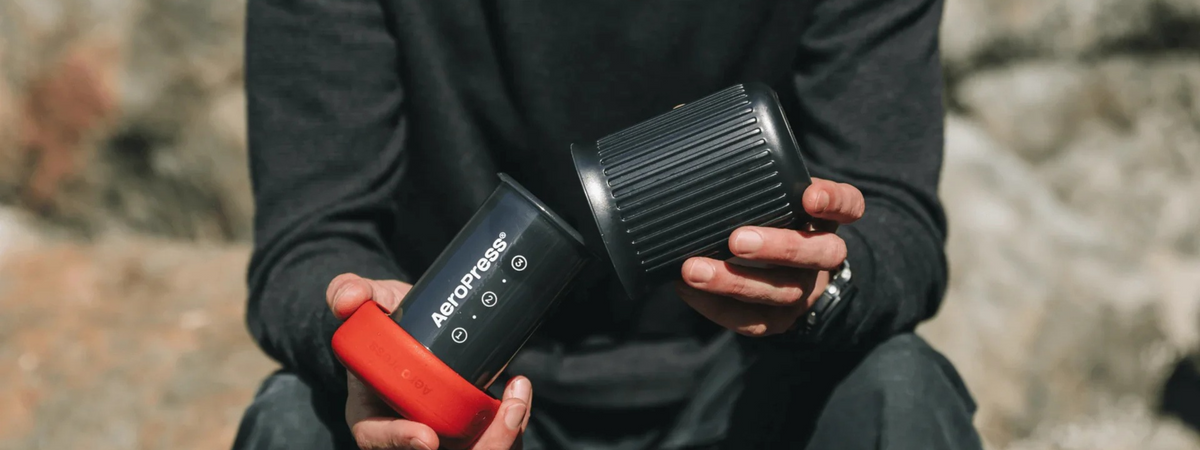
Fuel for the trip: Dog and Gun Coffee
No outdoor podcast conversation gets very far without coffee — and this one very nearly didn't, because Dave brought the wrong car and left the coffee in the other one.

There's a nice bit of overlap here, though: Dog and Gun Coffee is one of The Outer Side's proud supporters, and they're proud to stock them too. They're Australian owned and operated, run by hunters and outdoor people, and they make coffee specifically for people drinking it a long way from a café. A small brand doing one thing properly is exactly they're kind of brand. Shop Dog and Gun Coffee here.
Partnering with other innovators in the outdoors
PAST Outdoors have been doing this long enough to know that the outdoor industry gets better when good operators back each other in.
Tony built The Outer Side from scratch because he believed people's stories were worth telling. Dog and Gun Coffee started because hunters wanted better coffee in the field.
PAST Outdoors started because Dave wanted a lighter tipi tent and couldn't find one, so he made it himself. He created the stove because Alli hates the cold. Different problems, same instinct — see a gap, build the fix, do it properly. It's the same reason they back brands that spend real money on R&D instead of the ones copying them, and the same reason they've committed 1% of their revenue to the planet.

Five and a bit years, five moves, ten e-commerce brands supported out of their own warehouse, a fully booked New Zealand hiking trip, and a few hundred people who'll give up a Saturday to come to one of their events. Twenty years of Special Operations behind the counter, a store full of brands they'd stake their name on, and a customer base that keeps coming back for the advice as much as the gear.
So have a listen to Dave on The Outer Side Podcast. Then come and see us — in store in Sydney, or online — and tell us what you're actually trying to solve. Bring the trip, the terrain and the budget, and they'll work backwards from there.
Because they're not selling you stuff. They're solving your problems.
Read the full episode transcript ▼
Dave Parker of PAST Outdoors in conversation with Tony on The Outer Side Podcast. Lightly edited for readability and length.
The fast five
Tony: Good day and welcome to The Outer Side. I'm Tony, and in this episode I'm joined by Dave Parker, the owner of PAST Outdoors. Welcome to the show, mate.
Dave: Thanks for having me on.
Tony: Thank you for providing this epic location. We're in a beautiful little spot south of Sydney and there's nowhere I'd rather be today. Let's start with the fast five — first thing that comes to mind. What was your dream job as a kid?
Dave: Builder.
Tony: Have you done any building?
Dave: Yes. I'm a qualified tradesman, in furniture making. I love making stuff, and builder was what I wanted to be.
Tony: Favourite place in Australia?
Dave: The high country, generally. The scenery, the lifestyle, a lot of family down there. Victoria is probably the last state where you can go hunting, fishing, camping, light a fire, all within 30 minutes of where you live, and you don't have to book or pay. It's the freedom, the scenery, that feeling of isolation. That's what I love.
Tony: If you could have an unlimited supply of one thing, what would it be?
Dave: Time.
Tony: The perfect answer. Favourite band?
Dave: NOFX.
Tony: You didn't even pause. And what would you eat for your last meal?
Dave: I've had a lot of last meals. Probably a big steak.
Tony: A lot of last meals, meaning you didn't think you'd have another one?
Dave: Absolutely. You live that life where this could be the last brekkie, so let's go.
Where the love of the outdoors started
Tony: Where did you form that love of the outdoors that ultimately led to starting an outdoors company?
Dave: I grew up in a small country town where you're always outdoors — motorbikes, .22s, out on the grandparents' property. That lifestyle probably led me to joining the military. I did that for 20 years and we spent a lot of time outdoors, which sort of takes the fun out of being in the outdoors. But the lifestyle when you're in the military is good times with good mates doing fun stuff. It effectively is camping with guns, and it was great fun.
As I was winding down my military career I thought, that's what I'm going to miss — being out with the guys, buying the kit, planning and doing trips. So I started doing a lot more in the outdoors as I was winding up. Post-military, post-university, I just naturally fell into making my own outdoors kit, and accidentally started PAST Outdoors by doing that.
Tony: The outfitting side of things — is that something that's always interested you, or was it learned through the military?
Dave: Learned through the military. The job I did, we effectively raised our own unit from nothing. We had to work out how to solve the problems we were given and what equipment we needed to do it. What I loved about the job was it was literally like a start-up business: a little bit of funding, a little bit of kit. Identify the problem, work out how we're going to solve it, work out what kit we need, then go and seek the best possible kit we could — because if the kit failed, we failed, and the mission failed.
That's what we took across into our business. We don't stock any rubbish, because we won't put our hand on our heart and say it's going to be good for you. What I love doing now is solving people's problems.
From Special Operations to business school
Tony: You went from the military straight to…?
Dave: I wrapped up close to 20 years in special operations, and literally three weeks before my discharge date I got offered a scholarship at AGSM at the University of New South Wales. I'd never been to full-time uni in my life, and suddenly there I was. Over the next 18 months I worked out what I wanted and didn't want to do post-military.
Tony: How was that transition?
Dave: That was probably the biggest shock. My unit was very select — everyone there was motivated to be there, motivated to join, motivated to do well, motivated to do a selection course and get there. You're not there by accident. Everyone just gets the job done. Then you go to university where people don't want to do something because they've got a headache. It was frustrating for me, and probably for them too, because I also wasn't as academic. I'm talking to people 20 years younger than me talking about what they did at school. School was a long time ago for me.
You had to really watch what you say. I met my wife at uni and she keeps a perpetual list of things I'm not allowed to say. I share that list with a lot of ex-military guys who are getting out.
The learning style was very different too. The military is really good at teaching the most complex task in about 40 minutes — the way they break things down and teach it. At university you'd have three hours of someone talking non-stop and still not cover what was on the program. I've done trade school, done a trade, been an instructor in the military, done post-grad. I know which instructional system works best.
Tony: But it was beneficial for starting the business?
Dave: Absolutely. Really good for learning how to talk business. If you try and do everything yourself in business you're going to fail miserably. But learning how to have the proper conversations with people matters. If a marketing company starts asking whether I've thought about the funnel, I can say, yeah, I know about the funnel, mate. Don't talk to me like I'm an idiot. It was good for filtering. And now we help manage about ten e-commerce stores, so we find ourselves speaking to a lot of people who are starting out in business, breaking it down and making it easy to understand. It also built a really good network — knowing who to call, when to call, when you need help and when you don't.
A sewing machine, a tipi, and faking it till you make it
Dave: I finished uni as COVID kicked off and we were pretty much locked in the house. I had a bit of breathing space, so I decided to make some of my own outdoor kit on a sewing machine. I made a tipi — the one you saw in the store. I posted it on Instagram and someone said, can you make me one? Then I recalled my entrepreneurship courses, which said fake it till you make it. So I faked it. Started an Instagram page, came up with a brand and a name, said I was taking pre-orders. And I got a pre-order. So then we'd better make it. I rang a few people, got a team together, produced working prototypes and got into production.
As we grew our social following, more people were asking what kit they needed. We were sending them to other stores and they were having mixed experiences — and that's my reputation in the middle there, so I decided to own it. We started approaching brands. Then we used those brands to leverage other brands: these guys are in, do you want in? And it's just grown from there. We started in a tiny 80 square metre unit with a bit of storage space. Now we've just taken over another warehouse — 700 square metres of floor space that we're managing.
Tony: You're still going five and a bit years later, which is more than a lot of small businesses can say.
Dave: You've got to make really good decisions early. You've got to put your money where it's going to make money, not in the fancy bells and whistles, and not let it get milked out of you by other people. Everyone wants a finger in your pie.
Running a business like a military operation
Tony: At what point did you learn operations, marketing, sales, e-commerce, warehousing?
Dave: I take a lot of what I learned in the military. I run the business like a military operation — everyone knows the mission, they understand our intent and how we're going to do it, and I keep everyone guided on that.
Marketing to me is just human analysis, and part of our job in the military was understanding humans. I also happen to have married a shit-hot marketing manager, which helps. Alli's amazing at it. We met at university doing our MBA together. She's got an anthropology background. People come into the shop and I ask how they found us and they say, I don't know, you guys just found me. She finds people.
And hiring the right people at the right time. I hire like I'm in the military: hire slow, fire fast. We come from an organisation where we identified people early, sorted them out, selected them and trained them. That's how I hire now. There are no wasted seats in our business.
The four sides of PAST Outdoors
Dave: We've got about four aspects to the business. There's PAST Outdoors, our e-comm and retail side, with all those high-end brands — Outdoor Research, Fjällräven, Patagonia, Lowa boots. We've got Sydney locked down for some of them. We only go after brands we like, and now they're coming to us as well, which is a bit of validation. Saying no to brands has been good too.
Then we've got our education space. We run navigation training, pairing up with other ex-military businesses — Clancy from Wayfinder Field Skills comes in and runs it. That's 20 years of military experience funnelled into a day for people. We've got women's self defence for women who like to get out there and hike and trail run. First aid courses. Cooking courses.
Then there's experiences, which we launched this year — mainly guided hikes in New Zealand. The first one's already booked out. We're running them every couple of months with a good Kiwi crew who take people to places most Aussies or Americans wouldn't even think to go. Everyone's thinking about doing one of the famous tracks that's six foot wide with people nose to tail all day. We're taking you out where you won't see another person. We also provide a lot of logistical support for people going in and out of the country — we can pre-position food and equipment for them.
And we do a lot of government work. My network into the military, police and ambos is pretty tight, and I take that military approach to kitting these guys out: mission before admin.
Tony: You've got a real advantage over a competitor because you've lived it.
Dave: I can empathise with what these organisations need. Our police rescue guys don't get recalled at nine in the morning and come back by five — it's normally the other way around. So I know they need good kit and good food when they need it, and we get it to them. I go and visit them, watch their training, see them out on ops. So I can put the right stuff in front of them at the right time, and I'm not going to mess them around with 60-day purchase orders. You need it because you got recalled? I'll get it to you right now, we'll sort the admin out later.
On missing it
Tony: Do you miss the military?
Dave: That's a question you get asked all the time, and it's hard to reconcile. I miss what I used to do, but what I used to do isn't there any more, because defence has changed. 9/11 happened when I was pretty fresh into the army, a 21-year-old over in East Timor, and then it was game on. I lived that for the next 16 or 17 years. That action wound down. There's still a lot happening in the defence space, don't get me wrong, but it's changed.
So I miss the boys, but that network never goes away. Every day there is someone from my unit in the store. Someone coming in to visit, say good day. New guys coming in because the lads at work have said, go down and see Dave, he'll sort you out. I keep in touch with my old regiment and head out there every now and again. It's a family. You can't get rid of them.
Tony: Is that love of the outdoors common across the military?
Dave: Some blokes hate it. I've got mates who hate getting their feet wet and would never go camping by choice — they'll sleep in the dirt when they have to, but not on their own time. But a lot of the guys love it. I did a trip last school holidays with three of my army mates and all of our kids. Everyone having a beer, the kids shooting over there, dirt bikes going, a big fire. I'm 41 years old and that still excites me. That's how a lot of us reconnect — a fly fishing trip, a hunting trip, or camping with our own kids.
There are some great organisations doing that too, like Younger Heroes, taking military and first responder parents out with their kids to reconnect, because you spend a lot of time away from your kids in the military, or the police, or fire. For millennia people have been getting outside to reconnect. It strips you down. No phones, no desk. Just two blokes on a chair.
"If it doesn't do two jobs, don't buy it"
Tony: Is that part of the challenge for you — working out which gear actually adds to the experience?
Dave: That's it. If it doesn't add value or capability, you don't need it. What's the point of it? Everyone says you must want to sell me a hundred things because it's super light or whatever. No. Just buy one good thing that does the job. I'm still using my ten-year-old pack. I've got 20-year-old bits of kit that are still good to go.
Tony: In the shop this morning you said something that really resonated — that you're not going to sell someone an ultralight hiking kit and then something else for their 4WD.
Dave: That's our whole ethos. If it can't do two jobs, don't have it. I'm not selling you an ultralight kit that can only be used for one little thing. Just like the military — you had one backpack for 20 years to go anywhere in the world, and that had to do you. You need to grab that bag and go anywhere and it needs to work for you. That golf bag's got to have all the clubs you need. And better to be looking at it than looking for it.
I can grab that bag, jump in a hired 4WD and do the same thing as someone with a $200,000 cruiser that never leaves the pavement. But I can also put that bag on my back and do something that a bloke who drills holes in his toothbrush to save weight can't. Multi-use, multi-purpose, long-lasting kit.
Sleep is a weapon
Tony: What did sleeping gear look like in the military?
Dave: When I joined the army, if you had a mat you were looked down on. Most sleeping would be a sleeping bag inside a bivvy bag to keep it dry, on a closed-cell foam mat cut down from your shoulders to your hips, just for a bit of comfort. That's it. I didn't even know inflatable mats existed until I got out of the army and a rep gave me one. I thought, these are incredible. I probably would have needed spinal surgery at 40 if I'd had a mat like that years ago.
Sleep is a luxury in that job. I've done countless missions where the sleep gear was a jacket pulled around your eyes. So now, blowing up a 10cm thick mat and a minus-12 bag feels like full luxury. But I also appreciate that sleep and rest are a weapon. We used to say sleep's a weapon. If you can get better sleep out there, you're going to perform better at everything you do.
Tony: Are you a bit of a gear head now?
Dave: In a way, but I've also been around enough evolutions to know a lot of it's gimmicky. Materials come and go. People are praising all these lightweight packs and I'm thinking, they're like the packs we got rid of in the '70s and '80s — no support, no nothing. It's interesting watching people push towards things we've already tried that didn't work.
But some of the tech is incredible now, mostly in the sleeping space. Mats get warmer, lighter and more compact every year. I've got a mat that's a few years old and the current one is a third of the size, a third of the weight and twice as warm. The maths doesn't add up.
I tell customers: if you went to a hotel for 300 bucks a night and there was no pillow, you'd be pretty filthy. So spend 50 bucks and get a pillow. Treat yourself.
Printing memories
Tony: There's a false economy in "free food" from hunting and fishing — forget the gear, the week off work, the fuel.
Dave: But forget all that. It's the experience. You're buying the one thing you said before — more time. You're just printing memories. Every photo, every trip. I can't buy that and I'll never have the time for that again. So it's worth it.
Curating a range, and turning people away
Tony: You've got a harder job than most, because you're selecting products you can retail and make a profit on, but you've overlaid that with your own critique.
Dave: We won't stock it if I wouldn't use it. It's really hard when you're trying to curate a range. And we're not there to sell people stuff, we're there to solve problems. Our return customer rate is huge. The community we've created is huge. We'll have an event and a couple of hundred people will arrive, and we know them all, because we're not selling them things that break. Our customers come back sharing photos and thanking us — or cursing us if something went wrong.
A lot of the time I'll send people out of the store without buying anything. You don't need this. It's not for you. That's a hard thing to do when you've got kids and staff to feed. But long term they're better off, so we're better off, because they come back. Most of our customers I consider friends. A lot of the people on our New Zealand hiking trip are return customers, and I'm actually looking forward to hanging out with them, using the kit they got from us.
Tony: What does a standard PAST Outdoors customer look like?
Dave: We don't turn our nose down at anyone. We're not an ultralight-only store, and we're not a hunting store. We've got Duke of Ed kids, we've got retirees, we've got a real range. In the same store on the same day, Alli can be in the corner talking to someone about the plant-based food range, I'll be kitting out two blokes going on a backpack hunt in New Zealand, Kristine will be kitting out a retired couple about to do the Camino, and one of the young lads has got a couple of kids doing their first Duke of Ed hike.
Having diverse staff who can empathise with everyone matters. Ironically Alli's the strictest vegan you'd ever meet and I'm a hunter, and somehow that works. Drawing our customer on a board is really hard. The common thing is they all want to learn. It's either their first time and they want to make a conscious decision about what they buy, or they've been around the block and had a bad experience with bad kit or bad service, and felt like they were taken for a ride. They want to be educated, they want to be served, and they want good kit.
Tony: You might stock the same product as a big chain, but will the person behind the counter know what it is, why it's three times the price, and whether it's right for that customer at that time?
Dave: We get that a lot with footwear. Someone comes in saying their boots don't fit and aren't breaking in. Of course they don't — they're mountain boots with a metal shank and they're never going to break in. What are you doing? I'm doing the Camino. Well, do it in thongs, mate. People buy the wrong kit at the wrong time. Or they've bought great boots online — fantastic boots, but not for you. Overkill is something we see a lot of.
And if someone comes in wanting a really cheap pair of boots just to get through one thing, I'll say: out the gate, turn left, right at the roundabout, head down there. We don't have that. It's not for you. I'm not going to sell them something they don't need, because they'll get angry and they won't be happy.
Word of mouth in the age of the paid review
Tony: Word of mouth is still so powerful — maybe more than ever, because people don't know what they can trust online.
Dave: Everything's an ad. Look at the back links, look at the little hiking lists — there are kickbacks in there somewhere. You've got to pay to get into a magazine, you've got to pay to get onto a review website. Not many of them are authentic, and it's really hard for consumers.
So we put a lot on word of mouth and network. My influencers are all SF guys and specialist cop units. They're not taking selfies. They give me feedback: that jumper you told me about is the best jacket I've ever worn. Or, mate, that food ruined my uniform. We get really solid feedback, and we're not promoting it on Instagram. They don't seek recognition or money for it. Most of our content comes organically from our customers, or we go and do it ourselves. I don't need a 20-year-old on his first hike on duck boards in the national park telling me what kit's good, because he's a content creator. We don't need to be validated by people who are out there purely for money and content.
Tony: I work in marketing, and I think there's a place for content creation. But the sniff test is: are you a credible source to tell me who to give my hard-earned money to? How much have you actually tested, and where?
Dave: And what is testing? It's a minefield out there.
Tony: We were at a show in Queensland on the weekend and a young bloke asked which radio he should buy. I said probably that one. He said, isn't the other one better? I said, you don't need it. He looked at me like I was from outer space. But my job is not to sell you the most expensive thing here. My job is to sell you the product that's fit for purpose, so you have a mad experience, tell all your mates, and come back in ten years and buy another one.
Dave: It's counterintuitive to good business. The easy money is rebranding something cheap and paying people to say it's the best thing ever.
Tony: You made a comment this morning that the more premium the product, the less margin there is in reselling it.
Dave: People think you're ripping them off with expensive gear. I make more money off the five muesli bars you bought than the $1,000 Garmin. It's not a margin-rich activity. It's your long-term customers where the value is. Good products cost money because the companies do the R&D, and because they're socially responsible — they're not underpaying their workers. Cheap products with high margins are generally built on someone else's intellectual property.
Tony: I bought a Helinox chair years ago. It's been all over the country, it's been belted, and it's still exactly the same as the day I bought it.
Dave: I've got 20-year-old stoves where the current model looks exactly the same. MSR haven't changed some of their products in 50 years, because it works. It ain't the lightest, it ain't the sexiest, but it's bombproof. I can run that thing on moonshine, jet fuel, petrol, diesel, and it'll still cook for me anywhere in the world. You forget how much you paid for something like that, because it's lasted so long.
Tony: Some of the most expensive things I've bought, I don't think of as expensive. I think of them as highly valuable, because I've got so much use out of them.
Hunting, and the pull of New Zealand
Tony: Was hunting something you did when you were younger, or more recent?
Dave: When I was younger it was rabbits with the .22, nothing serious. Then I was flat out in the military for so long that you didn't have time — you were on an hour's recall most of your career, or you'd spent enough time away that it's hard to justify another trip away. So I only really got into it as I was wrapping up.
I like deer hunting. The solitude of it, and how hard it is to do properly. Not shooting paddock animals with a thermal — back country, proper hunting. Mountain style. I love New Zealand. I love the pursuit of really hard game animals that you blow a gasket trying to get to, and years of coming back empty-handed. I like it to be hard.
What I loved about the army was the whole planning cycle — planning a mission, getting the kit, training for it, doing it to a really high standard and achieving it. When you're not doing that on a daily basis you need something else to keep you focused. That's what I fell into. For the last seven years I've been going to New Zealand a couple of times a year if I can.
Tony: What does the preparation look like?
Dave: There'll always be a group chat, and it'll always have a stupid theme. One of my mates, Seth, is usually the instigator. Last year I got added to a group called the boat racing team. I said, what is this? He said, we're going to buy some cheap boats, cross a river and go up this catchment. I said, I'm in.
Then we start planning where we're going. The boys will do a couple of recces. We've got a good network of people we'll talk to. Alli will start putting together a content card — here's your shot list, boys. We identify what we want to target. We hunt pre- or post-roar, partly because it's better hunting and partly because where we go is quite remote and we're trying to do a bit of herd management. We're not out there to blast young animals. Then we pick a location, pick a duration, and get a bit of new kit to test.
We'll get all the food pre-staged at my mate's house over there, fly in, jump straight in the car and we're out. Drive to a trailhead and walk in. We're chasing chamois, so you've got to climb high. Chamois are actually an antelope from the European Alps, not a goat, and they live in the most inaccessible places you can think of. You might be able to see one but not get to where you'd have a shot, and even then you couldn't recover it. So you've got to walk further than the last person, and then you've got to climb. We joke it's a thousand-metre buy-in.
Tony: Are you eating them?
Dave: Absolutely. The last one we ate mostly raw, like a carpaccio. Sliced raw, it was like bluefin tuna sashimi. Beautiful game animal. We eat every bit of it we can physically carry out.
Two countries, two cultures
Tony: New Zealand has an interesting way of managing animals — deer are a pest, but also a resource.
Dave: New Zealand is very remote and there's a lot of grass, so deer breed up heavily and if they're not controlled they get out of control. It only takes a couple of seasons. But when they manage them, they recover them. The venison market is valuable enough over there to put a helicopter in the air and recover the meat.
They've recently recognised some herds as being of special interest — after hundreds of years, they're accepting them as part of the landscape rather than trying to wipe them out. And the people managing those herds are also managing the pest species that are decimating the bird life, so they're managing the whole area. Recreational hunting alone is never going to keep populations under control, because by nature we're too selective.
A lot of people think New Zealand is just Temu Australia. It's not. It's a completely different culture — settled by hardy people who worked bloody hard on the land to get where they are. Anyone who settled New Zealand, and that's well before white settlement too, worked bloody hard to be there. Australia is much more fractured. I can't keep track of what I'm allowed to do in each state.
The Royal National Park is a good example — it was literally established as a hunting reserve for Sydney, the second national park in the world, and now the question is what do we do with the deer. In New Zealand you've basically got the Department of Conservation and they manage everything: the hunting, the fishing, all of it. Here, every organisation works against the others. Everyone's got the same mission. Why can't we all just get along?
Tony: And 20 kilometres into a trail in New Zealand, you bump into another hunter and end up working together.
Dave: Completely different to here. And it's closer than Perth. Three hours and we're in Auckland.
Tony: If you're listening and you haven't been to New Zealand, get over there. Incredible country, great people.
The bucket list
Tony: One final question. Anything on the bucket list you've got to tick off?
Dave: I'd love to do the trips I do now with my boys. I never got that opportunity with my own father — he died when I was quite young — and I'd love to be the first in my bloodline to teach my kids how to hunt and do a trip like that. Or any sort of adventure that pushes all of us to our absolute limits.
Tony: Great answer. Dave, it's been awesome to sit down with you. If anyone wants to find you, where's the best place?
Dave: The website, pastoutdoors.com, or the socials — @pastoutdoors on Instagram. A lot of people message thinking it's me, but it's usually Alli or one of the girls. We've also got a YouTube channel where we put out gear reviews and instructional content every chance we get.
Tony: We'll drop all the links in the description. Thanks, mate. And we'll see all of you next time on The Outer Side.

Leave a comment
This site is protected by hCaptcha and the hCaptcha Privacy Policy and Terms of Service apply.