
Winter and Alpine Hiking Boots
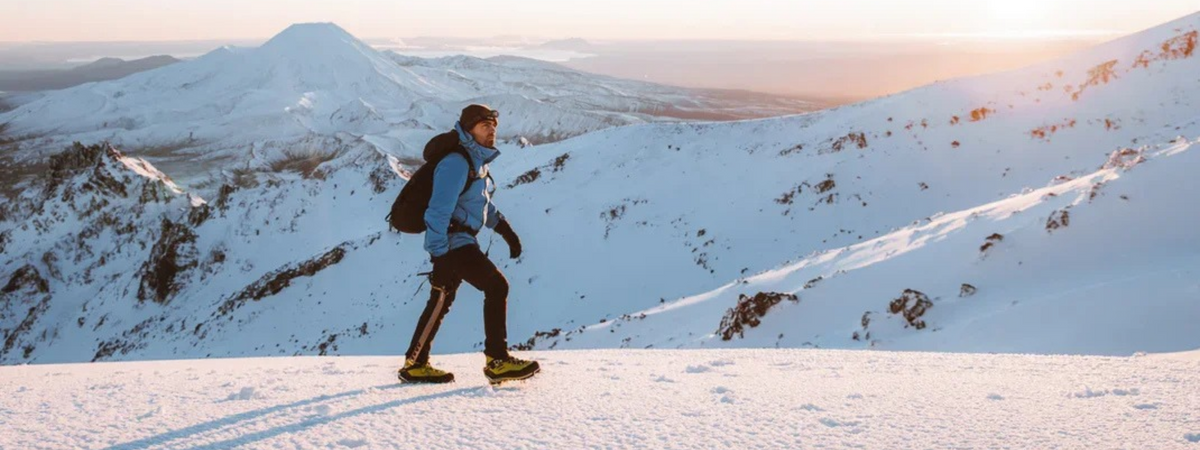
Winter hiking boots have a tougher job than summer boots. They need to keep snow, slush and cold water out, hold your foot steady on frozen ground and work with crampons when the terrain demands it. Choose well and winter is some of the best walking of the year. Choose badly and you'll have cold, wet feet and a long walk back.
This guide explains what to look for in snow hiking boots, mountain boots and winter trekking boots, how crampons for hiking boots work with them, and which boots and accessories we stock for the Australian Alps, Tasmania and New Zealand. Our picks come from the details on each product page, checked against outside guides on crampons and winter footwear.

Shop hiking bootsShop winter essentials
The short answer: what to look for in winter hiking boots
- Waterproofing: a GORE-TEX or similar membrane, plus gaiters to keep snow out of the top.
- Stiffness and support: a stiffer sole and a supportive upper for frozen, uneven ground and for carrying a heavy pack.
- Protection: a high rand that protects the boot from rocks and scree, and robust toe protection.
- Crampon compatibility: if you'll use crampons, check that your boots are stiff enough for the type you choose.
- Fit with warm socks: enough room for thicker socks without letting your heel move. See our guide to how to fit hiking boots.
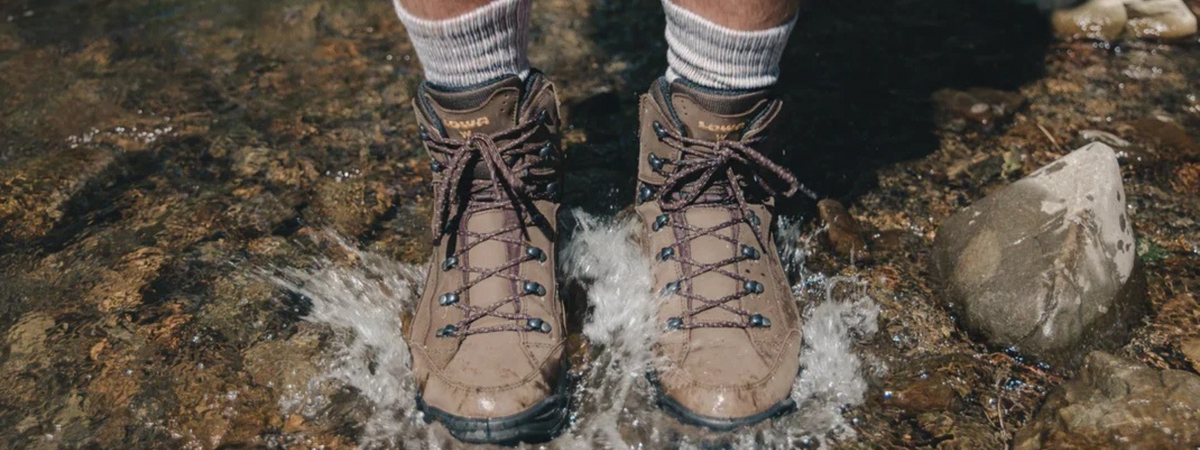
Want to see the range before you compare? Browse our waterproof hiking boots, our full range of hiking boots, or the LOWA collection.
Shop waterproof hiking bootsShop hiking bootsShop LOWA
Winter hiking boots compared
| Boot | Best for | Highlights from the product page | Trade-off |
|---|---|---|---|
| LOWA Tibet EVO GTX Wide | Harsh alpine terrain, 3 to 4 season use, heavy loads | Updated rand and outsole, support for 25 kg+ loads, wide fit | The most serious (and most expensive) option here |
| LOWA High Country EVO GTX | Steep, rocky terrain and tough weather | High alpine rand, GORE-TEX membrane, X lacing stud, 3 to 4 season | Limited stock |
| LOWA Ranger EVO GTX Wide | Rocky terrain and heavy packs in the high country | Steep terrain, 25 kg+ packs, wide fit | Less alpine-specific than the Tibet or High Country |
| Mammut Kento Tour High GTX | Classic mountain tours and via ferrata | Vibram sole, split leather upper, GORE-TEX membrane | Lighter-duty, so not the pick for big loads |
None of these product pages list insulation. In practice, most warmth comes from good socks, layers and keeping moving, and we'd rather tell you that than promise a temperature rating we can't back up.

Snow hiking boots vs mountain boots: what is the difference?
Snow hiking boots are waterproof, grippy boots for walking on snow and slush. Mountain boots are stiffer and more protective, built for steep terrain, heavy packs and, in some cases, crampons. A lot of winter walking in Australia sits in the middle. If you're on formed tracks or snow-covered fire trails, a waterproof boot with good tread and gaiters may be all you need. Once you're on steep, icy or off-track terrain, stiffer mountain boots earn their place.
Crampons for hiking boots: what you need to know
Crampons are metal spikes that strap or clip to your boots to grip ice and hard snow. Not every boot works with every crampon, because crampons need a boot stiff enough to hold them without flexing. A flexible boot with a rigid crampon can let the crampon loosen or even break, and put strain on your ankle.
The industry uses a simple rating system. Boots are rated B0 to B3 by stiffness, and crampons are rated C1 to C3, with the rule that a crampon should be no stiffer than the boot:
| Boot rating | Typical use | Crampons that suit |
|---|---|---|
| B0 | Everyday walking boots, very flexible | Not suitable for crampons |
| B1 | Stiff four-season boots for long winter walks | C1 (flexible, strap-on) |
| B2 | Stiffer boots for summer alpinism and winter mountaineering | C1 or C2 (semi-rigid) |
| B3 | Stiffest boots for technical mountaineering and ice climbing | C1, C2 or C3 (rigid, step-in) |
This is a general guide, so check with the maker of both your boots and your crampons. Our product pages don't list a B rating for the boots above, so please ask our team to confirm which crampons suit the boot you're considering before you buy. Larger boot sizes also flex more, which is where accessories like the Black Diamond Long Flex Center Bars come in. They adjust crampons to fit oversized boots.
Crampons or traction aids?
Many winter walks don't need full crampons. On packed, icy tracks and gentle terrain, a lightweight traction aid is easier to carry and use. Steeper snow slopes, hard ice and alpine terrain call for proper crampons, and the skills to use them. If you're new to crampons, consider a course or going with experienced companions, and always check conditions and forecasts before you head up.
Our picks: winter and alpine boots
LOWA Tibet EVO GTX Wide
Our most serious alpine boot. The product page describes a rugged boot for experienced hikers tackling harsh alpine terrain, with an updated rand and outsole for durability, grip and protection in extreme weather. It's built for 3 to 4 season use and for carrying loads of 25 kg+ over long distances. It's a wide-fit boot, and its product images carry a crampon-compatibility label, so ask us which crampons suit it. Its product page doesn't list insulation, so build warmth with socks and layers.

LOWA High Country EVO GTX
A hard-duty backpacking boot for tough weather and steep, rocky terrain, with a high alpine rand that protects against rocks and scree. It's built for 3 to 4 season performance, with a waterproof and breathable GORE-TEX membrane and LOWA's X lacing stud to hold the tongue in place, and its product page says it carries packs of over 25 kg. Stock is limited, so check the product page for your size.

View LOWA High Country EVO GTX
LOWA Ranger EVO GTX Wide
A rugged boot for steep, rocky terrain, described on its product page as ideal for experienced users carrying 25 kg+ packs, and as a trusted choice for the Australian high country and New Zealand terrain. Its product images also carry a crampon-compatibility label. It's a slightly more accessible step into serious boots than the Tibet.

Mammut Kento Tour High GTX (men's)
A lighter mountain boot for classic mountain tours and via ferrata, with a Mammut and Vibram sole for traction while keeping weight down. It has a split leather upper and a GORE-TEX membrane. It suits day tours and lighter loads better than big multi-day carries.

View Mammut Kento Tour High GTX (men's) Shop all hiking bootsShop mountaineering
Our picks: crampons and traction
Black Diamond Contact Crampon
A compact, 10-point stainless steel crampon with a quick-adjust attachment system, which its product page says is compatible with a wide range of footwear. ABS plates are included. It's the crampon to consider for icy and snowy terrain above the snow line, where a slip is a real risk.

View Black Diamond Contact Crampon
Edelrid Spiderpick II Contact Crampon
A hardened steel traction chain for sure footing on icy and packed snow. Its product page calls it lightweight, easy to fit and ideal for winter hiking and everyday winter outdoor activities where a full crampon would be overkill. It's a traction aid for walking, not a crampon for steep ice.

View Edelrid Spiderpick II Contact Crampon Shop poles and cramponsShop winter essentials
Keep your feet warm and dry: gaiters and socks
The right boots are only part of the system. Snow that gets over the top of your boot melts and soaks your socks, so gaiters are worth carrying. Warm merino socks add insulation and wick moisture. Take care not to over-tighten your laces, because tight boots restrict circulation and make your feet colder. For more on gaiters, see our ultimate guide to gaiters, and for the rest of your kit, our winter hiking accessories guide and Dave's 5 winter outdoor faves.
Outdoor Research Crocodile Gaiters (men's)
Waterproof gaiters made with GORE-TEX 3L fabric and abrasion-resistant Cordura, designed to keep snow, mud and debris out of your boots. They have an adjustable camlock at the top and a lace hook that holds the bottom in place in snow and mixed terrain. There's a women's version too.

View Outdoor Research Crocodile Gaiters (men's)
Wilderness Wear Merino Fusion Max Hiker Socks
Merino socks with enhanced cushioning and warmth, reinforced at the heel, sole and toe, with elasticated arch support to reduce slipping and bunching. Their product page says they supply warmth and moisture-wicking for activities from climbing to hiking.

View Wilderness Wear Merino Fusion Max Hiker Socks Shop gaitersRead the gaiters guideShop hiking socks
How to fit winter hiking boots
Fit is even more important in winter, because tight boots restrict circulation and loose boots let your heel move. Our boot fitting guide explains the process in full.
- Try boots on in the afternoon, wearing the socks you'll use in winter.
- Leave room for your toes to move, because tight boots mean cold feet.
- Check your heel stays put, and use heel lock lacing if it lifts. Our guide to how to fit hiking boots shows how.
- Walk up and down a slope. Your toes shouldn't hit the front on the way down.
- If you'll use crampons, bring them or ask us to check the pairing.
Looking after winter boots
Snow, salt and slush are hard on boots. Clean and dry them after each trip, away from direct heat, and re-treat the outside when water stops beading. Our guide to how to waterproof and care for hiking boots covers cleaning, conditioning and the products we recommend. When your boots have done their job, see the 5 signs it's time to replace your hiking boots.
Choosing between our picks
- Heavy loads and harsh alpine terrain: the Tibet EVO GTX.
- Steep, rocky terrain and tough weather: the High Country EVO GTX.
- Rocky high-country walking with a heavy pack: the Ranger EVO GTX.
- Mountain tours with a lighter pack: the Mammut Kento Tour High GTX.
For our wider recommendations, see Dave's picks for the best hiking boots in Australia, and for a side-by-side look at the range, our hiking boots comparison guide. If you're weighing up boots against shoes for the cooler months, read hiking boots vs hiking shoes.
Dave's picksHiking boots comparison guideHiking boots vs hiking shoes
Try winter boots on in store
Winter boots need to fit well over your winter socks, and crampons need to suit the boot. Come into our Helensburgh store and our team can help with both. We're at 10/177 Princes Highway, Helensburgh NSW 2508, open Monday to Friday 10am to 5pm and Saturday 9am to 1pm.
Contact the storeCall (02) 4294 2810

Why shop with us at PAST Outdoors
We're a family-owned and operated Australian outdoor retailer based in Helensburgh, NSW. We only stock gear we trust, and we're trusted suppliers for emergency services, government, military and outdoor education groups.
Winter gear is a safety decision as much as a comfort one, so we'd rather talk it through with you than rush a sale. Our team will ask where you're going and how much you're carrying, explain how boots and crampons work together, and tell you honestly when something is more than you need. Come in and see us, or shop online at pastoutdoors.com. We're always happy to help with the rest of your winter kit as well.
Frequently asked questions
What are the best winter hiking boots?
It depends on where you're walking. For harsh alpine terrain and heavy loads, the LOWA Tibet EVO GTX and High Country EVO GTX are our most serious options. For rocky high-country walking, the Ranger EVO GTX suits heavy packs, and the Mammut Kento Tour High GTX suits lighter mountain tours.
Do I need insulated winter hiking boots?
Not necessarily. None of the boots we recommend list insulation on their product pages, so most of your warmth comes from socks, layers and keeping moving. If you run cold or will be standing around in snow, ask our team about your options.
Can I wear regular hiking boots in snow?
Yes, for walking on snow and slush, as long as they're waterproof and have good tread, ideally with gaiters. For steep or icy terrain, stiffer mountain boots and crampons are safer.
What are the best crampons for hiking boots?
It depends on your boots and the terrain. A crampon should be no stiffer than your boot. The Black Diamond Contact Crampon suits icy and snowy terrain, and the Edelrid Spiderpick II Contact is a lighter traction aid for packed snow and ice.
Can I use crampons with any hiking boots?
No. Crampons need a boot stiff enough to hold them. Flexible boots (rated B0) aren't suitable, and a rigid crampon on a flexible boot can come loose or put strain on your ankle. Ask our team to confirm the pairing before you buy.
What do B1, B2 and B3 mean?
They're boot stiffness ratings. B1 is a stiff four-season boot that takes flexible C1 crampons, B2 is stiffer and takes C1 or C2, and B3 is the stiffest and takes C1, C2 or C3. It's a general guide, so check with the manufacturer.
Are the LOWA Tibet EVO and Ranger EVO crampon compatible?
Their product images carry a crampon-compatibility label, but our product pages don't list a stiffness rating. Ask our team to confirm which crampon type suits each boot.
What's the difference between crampons and traction aids?
Crampons are built for hard snow and ice and steeper terrain, and take skill to use. Traction aids like the Spiderpick II Contact suit packed, icy tracks and everyday winter walks where full crampons would be overkill.
Should I buy winter hiking boots a size bigger?
Not automatically. You need room for thicker socks and your toes, but your heel must stay locked in. Try boots on with your winter socks and see our guide to how to fit hiking boots.
How do I keep my feet warm hiking in winter?
Wear merino socks like the Wilderness Wear Merino Fusion Max Hiker Socks, keep your laces comfortable rather than tight, use gaiters to keep snow out, and keep moving. Change out of damp socks when you stop.
Can I try winter hiking boots in store?
Yes. Visit our Helensburgh store at 10/177 Princes Highway to try boots with winter socks and check crampon pairings, or call (02) 4294 2810. You can also shop online at pastoutdoors.com.
Get ready for winter on the trail
Come in and try boots with your winter socks, and we'll help match your crampons. Or shop online.
Shop hiking boots Shop winter essentials


Leave a comment
This site is protected by hCaptcha and the hCaptcha Privacy Policy and Terms of Service apply.