
How to Waterproof and Care for Hiking Boots
A good pair of hiking boots is a real investment, and how you look after them decides whether you get a couple of seasons out of them or many years. That's the idea behind buying once and buying right: choose a boot that suits you, then care for it properly so it keeps doing its job. The good news is that boot care is simple, cheap compared with the boots themselves, and quick once it becomes a habit.
This guide covers how to waterproof hiking boots, how to clean and condition leather, when to replace laces, and which care products suit which boots. We compare the best waterproofing for hiking boots that we stock, so you can match the right product to your boot.

Shop footwear careShop hiking boots
The hiking boot care routine in five steps
- Clean your boots after a trip, before dirt dries into the seams.
- Dry them slowly and naturally, away from direct heat.
- Condition leather boots to keep the leather supple.
- Waterproof when water stops beading on the surface.
- Check your laces, soles and stitching before every trip.
Best waterproofing for hiking boots: which product for which boot?
The best waterproofing for hiking boots depends on what your boots are made of. Smooth leather, suede and nubuck, and technical fabric all take different care. This table summarises what our product pages say about each option:
| Product | Best for | What it does | Good to know |
|---|---|---|---|
| LOWA Water Stop Eco | Leather boots, and boots with GORE-TEX or other membranes | Water-based spray that protects against water and soiling without restricting breathability | PFC free. LOWA pairs it with Active Creme for leather boots |
| Gear Aid Revivex Suede + Fabric Water Repellent | Suede, nubuck and technical fabric boots | Spray that protects against moisture, dirt and stains while keeping breathability | PFAS-free and safe for technical fabrics |
| LOWA Active Creme | Smooth leather boots | Colourless conditioner that keeps leather supple and prevents drying and brittleness | A conditioner, not a waterproofer. Use it with a waterproofing spray |
| LOWA Shoe Clean Boot Care Spray | Smooth leather, suede, and leather and textile combinations | Cleans and moisturises, with 90% natural ingredients | Cleans before you condition and waterproof |
Looking for boots that are built to keep water out in the first place? Browse our waterproof hiking boots, or see the full LOWA range.
Shop waterproof hiking bootsShop LOWA
Not sure what your boots are made of? Check the product page or the tag inside the boot, or bring them in and we'll tell you.

How to waterproof hiking boots, step by step
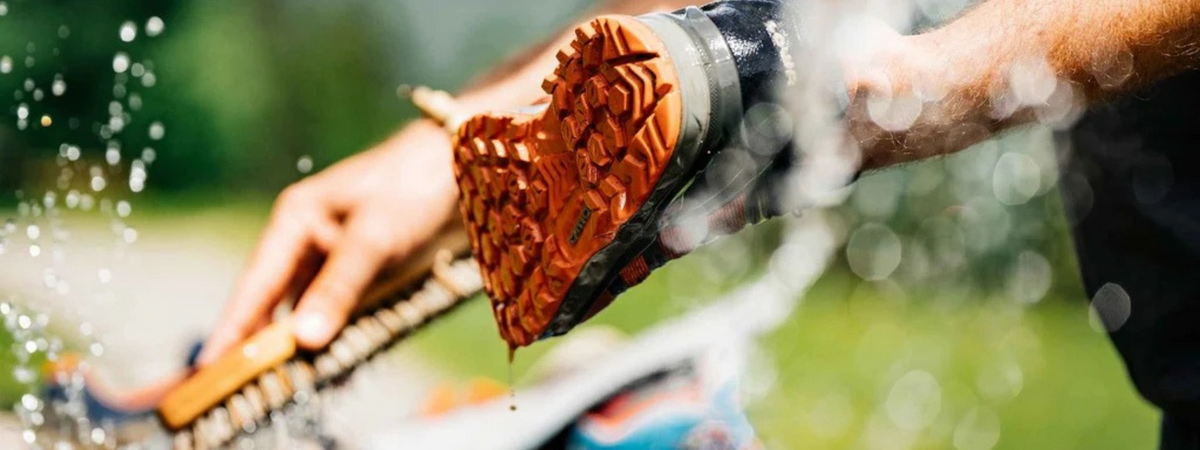
- Clean the boots first. Remove the laces and insoles, brush off loose dirt and wipe the boots clean. Waterproofing sprays work best on clean material.
- Let them dry. Air dry naturally, away from heaters and direct sun. Follow the instructions on your waterproofing product for whether the boots should be dry or slightly damp.
- Condition leather boots. If your boots are leather, work a conditioner such as Active Creme into the leather first, then brush off the excess.
- Apply the waterproofing spray. Spray evenly over the whole boot from the distance the label recommends, covering seams, the tongue edge and the flex zones where the boot bends.
- Wipe off the excess and let it dry. Give the boots time to dry before you wear them.
- Test it. Water should bead on the surface. If it soaks in, apply another light coat.
Always follow the instructions on the product you're using, because they vary between sprays.
Does waterproofing affect GORE-TEX boots?
Boots with a GORE-TEX lining have a waterproof membrane inside the boot, so the boot stays waterproof even when its outer material is wet. But when the outer fabric or leather soaks up water, the boot feels heavy, takes longer to dry and breathes less. Re-treating the outside restores its water repellency so that water beads off. That's why we like sprays such as LOWA Water Stop Eco, which its product page says is suitable for GORE-TEX and other climate membranes and doesn't restrict breathability.
Leather boot care: cleaning and conditioning
Leather is a natural material, and like skin it needs care to stay supple. Dry leather can stiffen and crack, especially at the flex point across the forefoot. A good routine is to clean with a gentle product, let the boots dry naturally and condition them before you waterproof.
- Clean: use a soft brush and lukewarm water, or a boot cleaner such as LOWA Shoe Clean. Avoid harsh detergents that can strip leather.
- Brush: a tool like the LOWA triangular cleaning brush handles mud, dried dirt and stubborn marks.
- Condition: use a leather conditioner such as LOWA Active Creme and work a little more into the forefoot flex zone.
- Waterproof: finish with a spray like Water Stop Eco.
One important warning from LOWA's product page: do not use care products containing beeswax, animal fats or petroleum oils, such as dubbin, neatsfoot oil, mink oil or Sno-Seal. Check your boot maker's care advice before using anything else. Our guide to caring for LOWA hiking boots covers LOWA boots in more detail.
How to clean hiking boots after a trip
- Knock off loose dirt and mud as soon as you can.
- Remove the laces and insoles so you can clean into every corner.
- Brush the boots, then wipe them with lukewarm water or a boot cleaner.
- Air dry naturally. Never dry boots next to a fire or heater, or in direct sun. Heat can crack leather, warp soles and weaken the adhesive that holds a boot together.
- Stuff wet boots with newspaper or let them air out, so they hold their shape and dry evenly.
Hiking boot laces: when to replace them and what to buy
Laces are easy to overlook, but they hold your fit in place. Frayed, stretched or worn laces slip, which can let your heel lift and cause blisters, and a broken lace on the trail is a nuisance you can avoid by checking them before each trip. Carrying a spare pair is a small weight for good insurance.
Choose laces by length, thickness and material. The LOWA hiking boot laces are a 3 mm round polyester blend, and the product page says to measure your current laces with a tape measure and size up if you're unsure. Its chart converts inches to centimetres:
- 44 inches = 110 cm
- 47 inches = 120 cm
- 51 inches = 130 cm
- 55 inches = 140 cm
- 59 inches = 150 cm
- 63 inches = 160 cm
- 67 inches = 170 cm
- 71 inches = 180 cm
New laces are also a good chance to check your lacing. Our guide to how to fit hiking boots shows how to use heel lock lacing for a more secure fit.
Drying and storing your boots
- Store boots somewhere cool and dry, away from direct sun and heat, which dry out leather and weaken adhesives.
- Take the insoles out so they dry properly.
- Don't leave boots in a hot car or a sealed bag, because trapped moisture can cause damage and odour.
- Check them again before your next trip, and clean and re-treat them if needed.
Our boot care picks
These are the care products we'd point you to, in the order you'd use them.
LOWA Shoe Clean Boot Care Spray
A clean-and-care spray made with 90% natural ingredients and the cleansing properties of natural bamboo extract. It cleans and moisturises, and it's suitable for all smooth leather and suede boots as well as combinations with textile materials. It comes in a pump dispenser.

View LOWA Shoe Clean Boot Care Spray
LOWA Triangular Leather Boot Cleaning Brush
A three-sided tool: one side has nylon and brass bristles for mud and dried dirt, one is a rubber buff, and one is an eraser for stubborn marks. Its product page says it suits suede, nubuck and velour as well as leather.

View LOWA Triangular Leather Boot Cleaning Brush
LOWA Active Creme
A colourless leather care conditioner that keeps leather supple and helps prevent drying out and brittleness when used regularly. It's PFC free. LOWA's tip is to apply a little more in the forefoot and flex zone, then brush away any excess, which it compares to lubricating a door hinge.

LOWA Water Stop Eco
A water-based, high-performance impregnation spray for hiking and climbing boots and leisure shoes. According to its product page it protects against water and soiling without restricting breathability, it's suitable for GORE-TEX and other climate membranes, and it contains no PFC. LOWA pairs it with Active Creme for leather boots.

Gear Aid Revivex Suede + Fabric Water Repellent
A water repellent spray for suede and nubuck footwear that protects against moisture, dirt and stains while keeping breathability. Its formula is PFAS-free and safe for technical fabrics.

View Gear Aid Revivex Suede + Fabric Water Repellent
LOWA Hiking Boot Laces
Replacement laces made by Sauter, German lace makers since 1924, in a 3 mm round design that passes easily through boot eyelets. The polyester blend gives some flexibility when pulled, and they come in a range of colours and lengths.

View LOWA Hiking Boot Laces Shop all footwear careShop LOWA
Buy once, buy right
The most cost-effective boot is the one you look after. Care products cost a fraction of the price of a good pair of boots, and a few minutes of care after each trip can add many kilometres to their life. It starts with choosing the right boot and getting the fit right: see our hiking boots vs hiking shoes guide if you're deciding between the two, our guide to how to fit hiking boots for sizing, and Dave's picks for the best hiking boots in Australia for our recommendations. If you're choosing a waterproof boot for women, see the best waterproof women's hiking boots in Australia.
And when a boot has done its job, our guide to the 5 signs it's time to replace your hiking boots explains what to look for.
How to fit hiking bootsHiking boots vs hiking shoes
Ask us about boot care in store
If you're not sure which product suits your boots, bring them in. Our team can look at the material, recommend the right care products and show you how to use them. We're at 10/177 Princes Highway, Helensburgh NSW 2508, open Monday to Friday 10am to 5pm and Saturday 9am to 1pm.
Contact the storeCall (02) 4294 2810

Why shop with us at PAST Outdoors
We're a family-owned and operated Australian outdoor retailer based in Helensburgh, NSW. We only stock gear we trust, and we're trusted suppliers for emergency services, government, military and outdoor education groups.
We'd rather help you look after the boots you have than sell you a new pair too soon, so we'll tell you honestly what your boots need. Our team can help you choose the right waterproofing, conditioner and laces, and talk you through the rest of your kit as well. Come in and see us, or shop online at pastoutdoors.com.
Frequently asked questions
What is the best waterproofing for hiking boots?
It depends on the material. For leather boots and boots with GORE-TEX or other membranes, LOWA Water Stop Eco is a water-based spray that its product page says doesn't restrict breathability. For suede, nubuck and technical fabric, the Gear Aid Revivex Suede + Fabric Water Repellent is PFAS-free and made for those materials.
How do I waterproof hiking boots?
Clean the boots and let them dry, condition them if they're leather, then spray the waterproofing evenly over the whole boot, including seams and flex zones. Wipe off any excess, let them dry fully and check that water beads. Always follow the instructions on your product.
How often should I waterproof my hiking boots?
When water stops beading on the surface and starts to soak in. How often that happens depends on how much you use them and in what conditions, so check them after wet or muddy trips.
Do I need to waterproof GORE-TEX boots?
The GORE-TEX membrane keeps water out, but the outer material can still soak up water, which makes the boots heavy and slow to dry. Re-treating the outside helps water bead off. LOWA Water Stop Eco is described as suitable for GORE-TEX and other climate membranes.
What is the best leather boot care routine?
Clean the boots with a brush and a gentle cleaner, let them air dry, condition the leather and then waterproof. LOWA Shoe Clean, LOWA Active Creme and LOWA Water Stop Eco are designed to be used together for LOWA boots.
What shouldn't I put on my hiking boots?
LOWA's product page says not to use care products containing beeswax, animal fats or petroleum oils, such as dubbin, neatsfoot oil, mink oil or Sno-Seal. Check your own boot maker's advice.
Can I wash hiking boots?
You can clean them by hand with a soft brush and lukewarm water or a boot cleaner. Avoid harsh detergents, and dry them naturally, away from heaters and direct sun.
How do I dry hiking boots safely?
Remove the laces and insoles, stuff the boots with newspaper if they're wet and let them air dry. Never dry them next to a fire, heater or in direct sun, because heat can crack leather and weaken the adhesive.
When should I replace my hiking boot laces?
When they're frayed, stretched or slipping, or before a big trip if they look worn. Measure your old laces before buying, and size up if you're unsure. The LOWA hiking boot laces are a 3 mm round polyester blend.
What length hiking boot laces do I need?
Measure your current laces with a tape measure. The LOWA laces come in a range of lengths, and the product page says to size up if you're unsure.
Can I get boot care advice in store?
Yes. Bring your boots into our Helensburgh store at 10/177 Princes Highway and our team will recommend the right products. You can also call (02) 4294 2810 or shop online at pastoutdoors.com.
Look after your boots, and they'll look after you
Pick up the right care products online, or come in and see our team at Helensburgh.
Shop footwear care Shop hiking boots


Leave a comment
This site is protected by hCaptcha and the hCaptcha Privacy Policy and Terms of Service apply.