

Folding vs. collapsible hiking poles: which should you buy?
Not all trekking poles pack down the same way, and the mechanism you choose affects everything from pack size to durability to how quickly you can deploy them on the trail. If you're comparing hiking poles folding via a Z-pole system against traditional collapsible walking poles for hiking that telescope down section by section, this guide breaks down exactly how each works, where each genuinely excels, and which one deserves a spot in your kit.

What's the actual difference between folding and collapsible poles?
The terms get used loosely, so it's worth being precise. Folding poles, often called Z-poles, use a small number of rigid shaft sections connected internally by a tensioned cord, similar to how a tent pole folds. Pull the sections apart, and they snap into a straight line, locked by a joint near the grip. Fold them back up, and the whole pole collapses into a compact bundle in seconds.
Collapsible poles, in the more traditional sense, telescope: one section slides inside another and locks in place using either a twist-lock or a lever-style clamp (often called a flip-lock or FlickLock). These have been the standard design for decades and remain widely used, particularly where full-length adjustability matters more than ultra-compact packed size.
For a complete rundown check out The complete guide to hiking poles.
Folding (Z-pole) hiking poles: compact, fast, and increasingly popular
Folding poles have become the go-to choice for hikers who value pack space and speed of deployment. Because they collapse into just two or three short sections rather than telescoping down, they take up considerably less room in or on a pack, and can typically be assembled or stowed in a matter of seconds, genuinely useful if you're switching between poles-in-hand and poles-away multiple times on a single hike.
The Leki Skysolo FX Carbon Compact Poles are a standout example. Using a hybrid carbon and aluminium shaft, they weigh in at around 227 grams per pole, while the External Locking Device folds them down into sections under 40cm, small enough to disappear into most daypacks. The minimalist Verticon grip is angled to keep your wrist in a more natural position, reducing strain over long days, and despite the folding design, the ELD system still allows for some length adjustment to fine-tune your fit.
For hikers wanting genuine technical performance in a folding pole, the Black Diamond Pursuit Carbon FLZ takes it a step further. Its 100% carbon fibre construction and Z-pole design with Speed Cone Technology allow for near-instant deployment and one of the most compact folded sizes on the market, around 14 inches. FlickLock+ adjustability adds precise length control on top of the folding mechanism, while ergonomic cork grips with Bloom algae foam extensions genuinely reduce hand fatigue on longer days. It's a premium pick, and the trade-off is weight (around 480g per pair) and price compared to simpler folding poles, but the comfort and durability are well regarded even among hikers who'd normally lean ultralight.
Why hikers choose folding poles
- Considerably smaller packed size than telescoping poles, easier to stash inside or strap to a pack
- Faster to assemble and collapse, useful for hikers who frequently switch between using poles and stowing them
- Modern folding poles, like the two above, still offer some length adjustment despite the compact fold
- Generally lighter overall, since folding designs use less overlapping material than telescoping shafts

Collapsible (telescoping) hiking poles: the traditional, highly adjustable option
Telescoping poles remain popular for good reason. Because each section slides fully inside the next, they offer a much wider range of length adjustment than most folding poles, useful if you're sharing poles between different height hikers, adjusting for steep ascents and descents throughout a single hike, or simply prefer to fine-tune your fit more precisely. The lever-lock or twist-lock mechanisms are simple, field-serviceable, and have a long track record of reliability, even in muddy or gritty conditions where fine folding joints can occasionally struggle.
The trade-off is packed size. A telescoping pole typically collapses to somewhere between 60 and 70cm, considerably longer than a folded Z-pole, meaning it usually needs to be strapped to the outside of a pack rather than stashed inside. They also tend to be marginally heavier for a comparable level of durability, since the overlapping shaft sections add extra material.
Why hikers still choose collapsible telescoping poles
- Wider range of length adjustment, useful for varied terrain or sharing between hikers of different heights
- Simple, field-serviceable locking mechanisms with a long history of reliability
- Often more affordable than premium folding poles at a comparable durability level
- Generally easier to source replacement parts for, given how long the design has been standard

Folding vs. collapsible: quick comparison
| Feature | Folding (Z-pole) | Collapsible (telescoping) |
|---|---|---|
| Packed size | Very compact, often under 40cm | Longer, typically 60-70cm |
| Deployment speed | Very fast, snaps into place | Slightly slower, extend and lock each section |
| Length adjustability | Limited but often still present | Wide range, easy to fine-tune |
| Typical weight | Generally lighter | Slightly heavier on average |
| Best for | Hikers prioritising pack space and speed | Hikers wanting maximum adjustability |
So which should you actually buy?
If pack space and quick deployment matter most, particularly for hikers who move between trail running, scrambling, and general hiking, a folding pole like the Leki Skysolo FX or the Black Diamond Pursuit Carbon FLZ is the better fit. If you want the widest possible range of adjustment, plan to share poles between hikers of different heights, or simply prefer proven, field-serviceable hardware, a traditional collapsible telescoping pole is worth sticking with. Either way, you're covered by our full trekking poles and crampons collection, spanning both mechanisms across a range of price points.
If you're still not convinced you need poles at all, we've made the case in our guide, why walking poles for hiking matter more than you think, and if you want a broader breakdown of what to look for beyond just the folding mechanism, our guide on choosing the best hiking poles covers grip, material, and tip options in more detail.
Put your poles to use
Once you've settled on the right poles, it's worth planning where to actually take them. If you're based around Sydney, we've rounded up some excellent options in our guide, best hiking trails near you in Sydney.

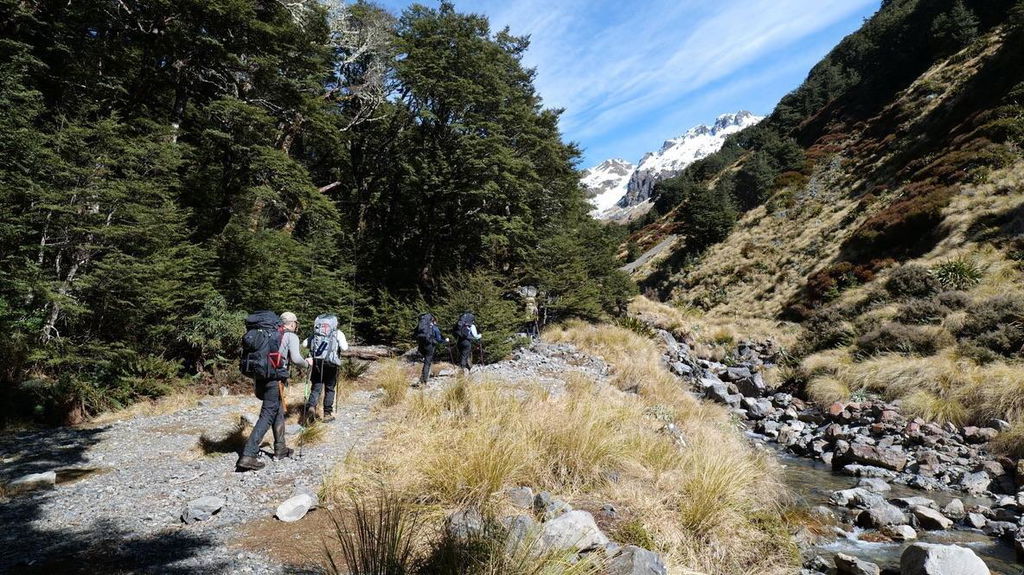
Dave Parker our Founder and CEO on a recent multi-day hike in Canterbury, New Zealand.
Why shop with us at PAST Outdoors
We're a family-owned Australian outdoor retailer with a genuine passion for helping people get out on the trail properly equipped. Our team tests and uses the gear we sell, so when we recommend a set of hiking poles, whether folding or collapsible, it's because we trust them ourselves on real trails, not just because they're on the shelf. We're proud to stock trusted brands like Leki and Black Diamond, and back every purchase with honest advice from people who actually spend time outdoors.
Thousands of hikers and campers across Australia have trusted us to kit them out properly, and our customers keep coming back because we get the details right. If you're ready to add a set of poles to your kit, browse our full range online today, or reach out to our team for personalised recommendations.
Frequently asked questions
Are folding hiking poles as durable as collapsible ones?
Modern folding poles from trusted brands like Leki and Black Diamond are genuinely durable, though the internal folding joint is a slightly different failure point compared to a telescoping lock. Both mechanisms hold up well when properly maintained and used within their intended terrain.
Can folding poles still be adjusted for length?
Many modern folding poles, including both the Leki Skysolo FX and Black Diamond Pursuit Carbon FLZ, include some adjustability on top of the folding mechanism, though generally with a narrower range than a fully telescoping pole.
Which type of pole is better for beginners?
A collapsible telescoping pole is often a great starting point, since the wider adjustment range makes it easier to find a comfortable fit while you're still learning proper pole technique and terrain-based adjustments.



Leave a comment
This site is protected by hCaptcha and the hCaptcha Privacy Policy and Terms of Service apply.